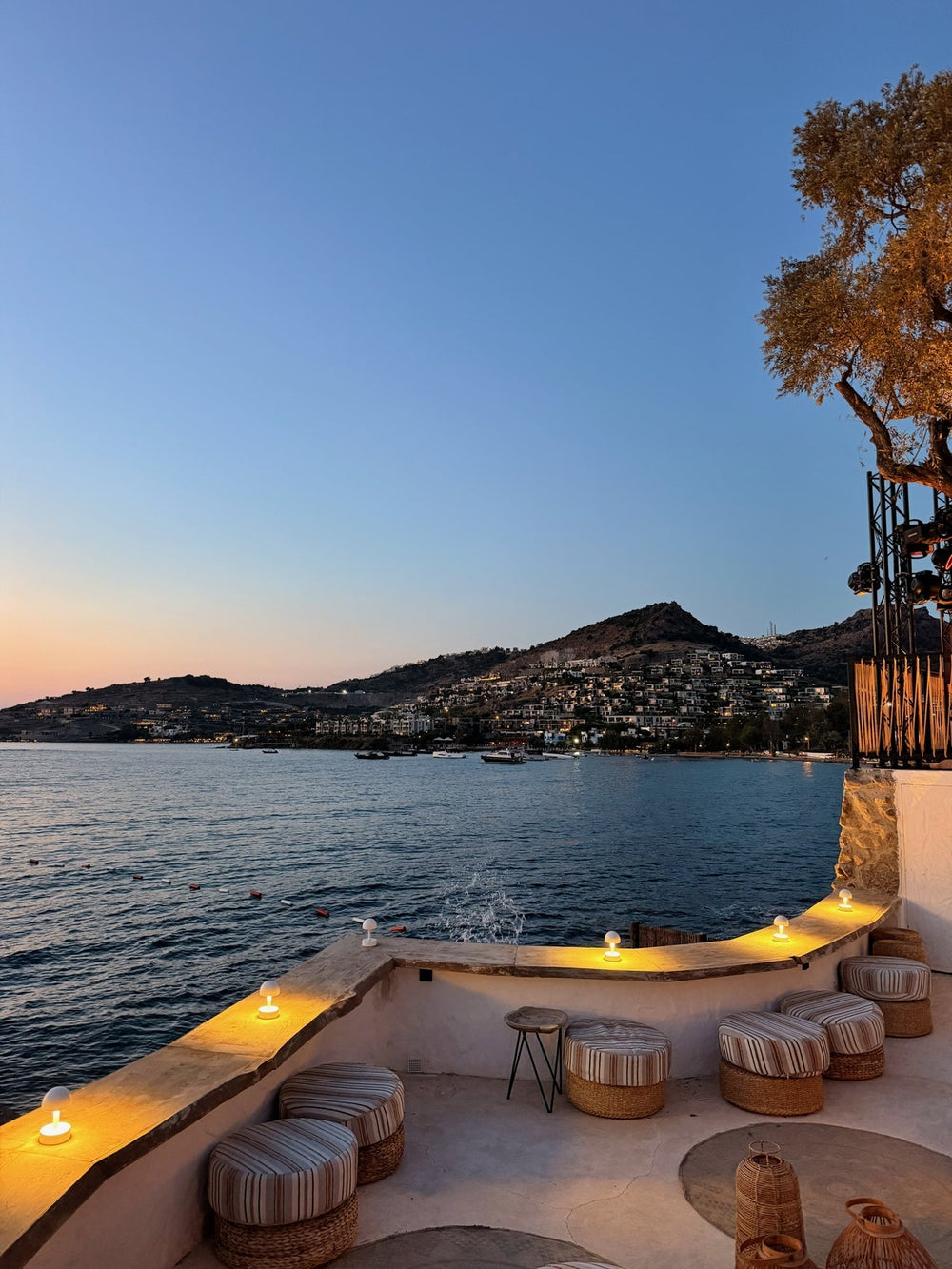


Luxury in Bodrum isn’t one-size-fits-all. On the same peninsula, you can spend the afternoon at a beach club where DJs play until sunset, retreat to a secluded hillside where the loudest sound is the wind through the olive trees, or stay in a hotel built around a private art collection rather than a swimming pool. That range is exactly what makes Bodrum so compelling—and what makes choosing the right hotel far more important than simply booking the most expensive one.
The peninsula has changed dramatically over the last two decades. International hotel brands have arrived alongside independent boutique properties, beach clubs have become destinations in their own right, and former fishing villages have evolved into some of the Mediterranean’s most sought-after summer addresses. Yet despite that growth, Bodrum still rewards hotels with a strong sense of identity. The places that stay with you aren’t necessarily the largest or the newest, but the ones that know exactly what they want to be.
This isn’t a ranking of Bodrum’s most luxurious hotels. It’s a selection of the boutique properties we believe best capture the many sides of the peninsula. Some are defined by architecture, others by food, art, or history. Some are made for lively evenings that end with live music, others for mornings that unfold slowly over the Aegean. The best one depends less on your budget than on the version of Bodrum you’re hoping to experience.
Maçakızı
In 1977, a woman named Ayla Emiroğlu opened a sixteen-room guesthouse on a stretch of Bodrum coastline that was still mostly cow pasture. Guests nicknamed her the Queen of Spades — Maçakızı, in Turkish — and the name stuck to the hotel along with her. Mick Jagger stayed. So did Rudolf Nureyev. By the time her son, Sahir Erozan, moved the property to its current site in Göltürkbükü in 2000 and expanded it to 74 rooms, Maçakızı wasn’t just a hotel anymore, it had become the reason people started calling this stretch of coast Turkey’s answer to St. Tropez.
That history is still legible in the details. There’s no front desk and check-in happens in a lounge where you’re as likely to be greeted by one of the hotel’s three resident dogs as by staff. Rooms are finished with textiles designed by Rifat Özbek, and the whitewashed, terraced architecture climbing the hillside toward the Aegean was built to stay out of the landscape’s way.
The wooden decks extend straight over the water, and loungers need to be booked in advance — a small system that keeps the beach club from becoming a fight for real estate. Music builds gradually from breakfast to last call and the atmosphere stays lively and social without ever feeling overwhelming.

In 2023, Maçakızı’s restaurant became the first in the Bodrum region to receive a Michelin star, under longtime executive chef Aret Sahakyan — a chef who’d worked with the family since the 1990s, long before anyone was handing out stars in this part of Turkey. That was followed by Ayla, a six-table second restaurant named for the founder, serving a tighter, more personal menu built around Sahakyan’s childhood memories of Turkish cooking.
The newer resorts on this coast are good at recreating the mood. Maçakızı invented it.
Bodrum Loft
Every other villa-style resort on this coast claims to be built into the landscape. Bodrum Loft actually is: the family behind it used only half their legal construction rights, leaving the hillside more forest than resort. The result is 38 stone villas scattered among the trees, connected by patios and courtyards rather than long hotel corridors. Built from stone excavated on-site and timber that will weather over time, Bodrum Loft is literally embedded into the hillside.
Staying here is less like checking into a hotel and more like leasing a summer house. The villas come with two, three, or four bedrooms, full kitchens, and generous outdoor living spaces where breakfast quietly turns into lunch and afternoons disappear without much notice. It’s the kind of layout that assumes you’ll stay for a week rather than squeeze everything into a long weekend.

The setting is one of the greatest strengths. The views across Demirbükü Bay are some of our favorites on the peninsula, and the water here is exceptionally clear, with calm conditions that make it easy to spend hours swimming. While the hotel strikes you as remarkably secluded, you’re only a short drive from some of the peninsula’s best beach clubs, restaurants, and marinas.
PaperMoon, the Bodrum outpost of the Milan institution, is one of the places we keep returning to for a seaside lunch — refined without tipping into formal, the kind of long meal that captures the relaxed elegance Bodrum does well when it’s not trying too hard. It’s one of three restaurants on-site, not the whole story: Loft Elia and Ters Köşe cover Aegean cooking and a seafood-driven take on Turkish meze, rounding out a program that clearly mattered as much to the owners as the architecture did. Bodrum Loft also runs LoftArt, a platform supporting Turkish artists, with sculpture and paintings placed throughout the grounds, creating something closer to an open-air collection than hotel decor.

It’s the sort of place where plans dissolve. You come back from breakfast intending to head elsewhere, then end up spending the afternoon swimming, reading on the jetty, and wondering why you’d leave at all.
Casa Dell’Arte
Casa dell’Arte was never meant to be a hotel in the ordinary sense. Fatoş and Yunus Büyükkuşoğlu — she an art collector, he a longtime figure in Turkey’s automotive industry — had spent thirty years acquiring work at auctions and in private studios before deciding, in 2007, to create a place where guests could live alongside it. Casa Dell’Arte became Turkey’s first boutique art hotel, and won The Guardian’s Best New Boutique Hotel award the same year it opened.
There are only 12 suites, each named for a zodiac sign, and each holding a different slice of the family’s anthology — Turkish modernists, Fabergé eggs, and at least one Botero, arranged the way a serious collector arranges a home. Two courtyards anchor the property: one holds the pool, ringed by exhibition space where the art on the walls is actually for sale; the other is strung with vintage French crystal chandeliers hung in open air. Set directly on the waterfront in Türkbükü, Casa Dell’Arte is less interested in the social scene that made the village famous than in creating a destination of its own.
The Büyükkuşoğlu daughters have since taken over stewardship of what’s now called the Büyükkuşoğlu Family Collection, and since 2011 the hotel has run an international artist residency during the off-season — one of the first of its kind in Turkey, and a sign that the “art hotel” label isn’t just branding.
Dining takes a similarly understated approach. The communal-table restaurant encourages conversation between guests, while Gonca next door keeps things simple with seafood, meze, and long dinners beneath the olive trees.
This is the only entry on this list where the art is the entire premise.
Amanruya
There are hotels you visit because of the destination, and there are destinations you choose because of the hotel itself. Amanruya belongs firmly in the second category. Hidden among olive groves and cypress trees on Bodrum’s quieter northern coast, Amanruya draws on the restrained architecture of pre-Ottoman villages: local stone, dark acajou wood, white marble, and courtyards arranged like a small settlement. It’s the kind of place that reads less like it was built for guests and more like it was excavated.
Privacy and silence are designed into every decision. Each freestanding pavilion sits within its own walled garden, complete with a private pool and shaded terrace, so generously spaced that seeing another guest becomes the exception. Even the beach requires a short walk before revealing itself; about 500 meters down a winding path, the private pebble beach opens up with a jetty and an offshore swimming pontoon.

Meals are spread across several distinct settings rather than revolving around one headline restaurant. The main dining pavilion sits poolside and serves traditional Mediterranean-and-Turkish-focused cuisine. For a more intimate experience, book the 10 person wine cellar, perfect for enthusiasts and special occasions. The best surprise is Nama, tucked into a luminous room with a wraparound balcony over the bay, where the menu runs to hand-rolled temaki, sashimi, sake and sunset cocktails.
But what we appreciate most about Amanruya is that it encourages guests to experience more than just the hotel itself. Alongside its wellness offering, Amanruya curates thoughtful cultural experiences, from private visits through ancient cities to traditional pottery and carpet-weaving workshops. Back at the resort, a three-storey library filled with books on Turkish art, architecture, design, and history, together with a small art gallery showcasing local artists, reflects the same philosophy. The emphasis isn’t on filling an itinerary but on slowing down and engaging more deeply with the place you’ve come to experience.
Amanruya isn’t the Bodrum we’d recommend to someone visiting for the first time. It’s the one we’d recommend once you’ve already experienced everything else. When beach clubs, reservations, and packed itineraries begin to lose their appeal, Amanruya makes a convincing argument for a different rhythm entirely.
Amanruya is currently closed for renovations tied to Aman’s broader investment in the property, including new branded residences, and it’s expected to remain closed through the 2026 season.
Ruins Luxury Resort
Few hotels on the peninsula change character as dramatically over the course of a day as Ruins. In the morning, it’s a quiet boutique retreat centered around a beautifully restored stone house, an elegant pool terrace, and a private waterfront deck overlooking the Aegean. By evening, those same spaces become one of Yalıkavak’s most energetic destinations.
The restored stone architecture gives the hotel a distinct identity, while sculptures, carefully curated artworks, and references to the region’s architectural heritage add another layer of character. Art isn’t treated as decoration here—it’s woven into the experience, creating a thoughtfully assembled collection of spaces. Although Yalıkavak Marina is only minutes away, it isn’t defined by it. During the day, the experience remains firmly rooted in the pool, the waterfront, and the sea.
The dining alone makes a compelling case for spending the evening on property. Miraj, the signature restaurant, is run by Michelin-starred chef Atilla Heilbronn, serving modern Turkish dishes built around ingredients sourced hyper-locally from the Muğla region. Upstairs, Sips Bodrum — a collaboration with Sips Barcelona, ranked among the World’s 50 Best Bars — gives the evening program real substance.
As the sun sets, a different energy takes form. The DJ begins, cocktails replace coffee on the terraces, and guests arriving just for dinner gradually mix with those who’ve spent the day by the water. It’s an unusually seamless transition—one that few boutique hotels attempt, let alone get right. Ruins is one of the rare places where you can spend the afternoon in complete quiet before stepping straight into one of Yalıkavak’s liveliest evenings without ever leaving.
Birdcage 33
Birdcage33 wasn’t built to be a hotel. Originally conceived as a private summer house for owners who planned to retire to Bodrum, it later evolved into one of the peninsula’s smallest boutique stays without shedding its residential identity. With just eleven rooms, the atmosphere is quietly familiar, and by the second day, you’ll recognize almost everyone by the pool.
That sense of intimacy extends to the setting. Perched on a hillside above Yalıkavak, Birdcage 33 enjoys one of the peninsula’s best vantage points, with panoramic views stretching across the Aegean and surrounding hills. Despite being only minutes from the marina, it feels remarkably removed from its pace. Even the pool terrace reflects that philosophy, taking its inspiration from the relaxed glamour of Slim Aarons’ iconic poolside photography rather than the spectacle of a traditional beach club.
Interiors are finished almost entirely in hand-applied Tadelakt plaster, paired with ceramics and furnishings commissioned from local artisans. The palette is deliberately quiet, allowing the views beyond the windows to remain the focal point. The adults-only policy keeps everything quiet by design, though Lika, the hotel’s restaurant and bar, shifts its own mood after dinner, the music easing from background to something with a bit more energy once the plates clear. Lika’s food goes by “Karma Mutfak,” an assorted-cuisine approach that pulls from Mediterranean, Turkish, Persian, Greek, and Ottoman traditions rather than committing to a single cuisine.
The hilltop location shapes the entire experience. Breakfast on the terrace comes with uninterrupted sea views, afternoons are spent by the infinity pool looking out across the bay, and evenings naturally begin with a drink at Lika before deciding whether to stay for dinner or head down into Yalıkavak. It’s a rhythm that makes the hotel feel connected to the town without ever being consumed by it.
Birdcage33 doesn’t try to compete with Bodrum’s larger luxury resorts. With one restaurant, one pool, and eleven rooms, it succeeds by remaining intentionally small—a reminder that sometimes the best boutique hotels are the ones that resist the temptation to become anything more.
Caja by Maxx Royal
Caja asks a different question than most luxury hotels in Bodrum: what if you didn’t have to choose between a private home and a five-star resort? The answer is twenty-two contemporary villas, each designed to feel like a permanent residence rather than temporary accommodation. Designed by Turkish studio GEOMIM, the villas reinterpret the simple whitewashed houses that once defined Bodrum in the 1980s. Full kitchens, generous living spaces, and private terraces reinforce the feeling that you’ve arrived at a beautifully designed coastal home.
Set in the peaceful surroundings of Hebil Bay, villas sit roughly thirty meters back from the water, a deliberate choice that keeps the pool and beach feeling genuinely open rather than squeezed between buildings. One of the reasons Caja remains so calm is that almost everything guests never need to see—from parking to service corridors and technical infrastructure—has been hidden beneath the villas. Staff move through the property almost invisibly, allowing it to read less like a resort and more like a quiet residential street.
Its location is another reason Caja stands apart. Hebil Bay remains one of the peninsula’s quieter corners, framed by olive groves and pine forests, yet Türkbükü and Yalıkavak are both close enough for dinner or an evening out. Back at the hotel, Roda serves an international menu, while Castana focuses on wine and cocktails in a more relaxed setting. Guests also have access to the broader Maxx Royal Bodrum resort at Cennet Bay, offering the option of a larger resort experience without making it your everyday one.
Caja doesn’t feel like an extension of Maxx Royal so much as an alternative to it. Where the main resort embraces the scale and energy of a five-star destination, Caja makes a case for something quieter: the freedom of having your own house in Bodrum, with hotel service quietly working in the background.
Casa Nonna
Not everyone comes to Bodrum looking for the beach club scene. Casa Nonna is for travelers who want the peninsula’s restaurants, marinas, and coastline within easy reach, but prefer returning somewhere noticeably quieter at the end of the day. As an adults-only hotel tucked into a secluded bay just outside Bodrum town, it offers a different perspective on the destination.
Food is where Casa Nonna’s actual point of view shows up. Much of the produce comes from Casa Nonna’s own farm and gardens, something surprisingly uncommon on this stretch of coastline despite how often hotels claim otherwise. That produce moves through three restaurants with distinct personalities: Morchella, the sea-facing dinner spot; Begonville, looser and more bohemian, built for long breakfasts and lunches; and Olive, smaller and more composed, with a library stocked with books on the region’s history for anyone who wants context with their meal.
That same restraint carries through the design. Muted tones, brass details, and subtle Art Deco influences create interiors that feel elegant without demanding attention, while works by contemporary Turkish artists quietly reinforce a connection to place. The 35 rooms and suites vary more than you’d expect from a hotel this size — some with a private terrace jacuzzi, one two-bedroom suite with its own kitchenette and living space built for a small group traveling together.
Instead of a busy beach club, there’s a private beach, a wooden jetty extending into the Aegean, and plenty of quiet corners to spend an afternoon reading, swimming, or lingering over lunch. For anyone wanting to see more of the peninsula without joining a larger excursion, the hotel also runs its own boat for relaxed days exploring nearby coves and snorkeling spots.
If Maçakızı represents the Bodrum people come to see, Casa Nonna represents the one they often end up falling in love with. It’s quieter, more personal, and proof that the peninsula doesn’t always need to be experienced at full volume.
OKU Bodrum
The newest hotel on the peninsula is also one of its quietest. Opened this past June on a secluded cove along Bodrum’s northern coast, OKU arrives with a very different idea of what a summer hotel can be. If you’ve stayed at OKU in Ibiza or Kos, you already know the vocabulary — earth tones, reclaimed stone, a kind of studied barefoot minimalism. What’s different here is the setting it’s dropped into. Bodrum knows how to throw a party, and OKU is making a case for the opposite instinct: fewer DJs, more quiet, a hotel that wants you looking at the water instead of who else is at the pool.
Everything about the hotel encourages your attention outward. All fifty-eight rooms face the sea, many with private pools, while a protected swimming bay and private jetty extend the experience beyond the rooms. The architecture is designed to frame the landscape, using reclaimed stone, timber, and soft earth tones that create an understated, distinctly boho-chic aesthetic.
That slower energy carries into the restaurants. Lunch at To Kima is designed for lingering by the water over grilled fish and Mediterranean dishes, while dinner shifts to Teyo, where Nikkei cooking brings Japanese technique together with South American flavors in one of Bodrum’s more interesting new dining rooms. Afterwards, the Round Bar becomes the natural place to end the evening, its amphitheater-style seating angled toward the sunset.
In a destination that often rewards doing more, OKU quietly argues for doing less.
YAZ Yalıkavak
YAZ has been a Yalıkavak fixture since 1994, though the version worth booking dates to 2017, when third-generation owners İnanç Işıklar and Elif Sünget stripped it down and rebuilt its identity around something many of Bodrum’s larger resorts struggle to offer: a stay that’s genuinely personal. Set on Tilkicik Bay, the rooms are kept simple — private balconies, sea views, nothing overdesigned — and lean on the water and the setting instead of amenities to do the work.
During the day, that’s exactly how it feels: quiet, warm, low-key, with Verano running the beach restaurant for anyone who wants lunch without leaving the sand. At night, the mood transitions. Galliard Cove House—the Bodrum outpost of the Istanbul restaurant — takes over the waterfront. Dinner stretches into cocktails, live music gives way to spontaneous dancing and impromptu singalongs, and what felt like a quiet boutique hotel only a few hours earlier becomes one of Yalıkavak’s livelier evenings. The paella is deservedly popular, but the dish we kept thinking about afterwards was the beef and truffle cappelletti. It’s one of the few boutique hotels where you’ll find almost as many local diners as hotel guests once the sun goes down.
What makes YAZ memorable is that it doesn’t separate the hotel from the destination. By day, it’s a peaceful place to spend time by the water; by night, it becomes part of Yalıkavak’s evenings. Just bear in mind that the atmosphere follows you back to your room, particularly those closest to the waterfront.