

Most travel recommendations start with what’s popular. If you loved one destination, you’re often encouraged to return or to book whichever place is trending next on social media. We think there’s a more interesting way to choose where to travel.
Rather than asking where everyone is going, we ask ourselves: What did you actually love about the place you just visited? Was it the elegant lakeside atmosphere? The beach clubs and long lunches? The quiet luxury? The dramatic landscapes? The walkable historic center? Once you understand what made a destination memorable, you can start looking for other places that offer many of those same qualities through a completely different culture, history, and landscape.
In this article, we’ve matched nine familiar destinations with places that capture a similar atmosphere, pace, or style of travel. They’re not replacements. They’re the kind of recommendations we’d give a friend who told us, “I want that feeling again, just somewhere different.”
If You Loved Paros, You’ll Love Favignana


At first glance, the two islands couldn’t look more different. Paros is defined by its whitewashed villages, blue-domed churches, and unmistakable Cycladic architecture, while Favignana is built from pale limestone, shaped by centuries of tuna fishing, and surrounded by some of the clearest water in the Mediterranean. Yet they offer a surprisingly similar way to experience a summer holiday.
What makes Paros so appealing isn’t just its postcard-worthy scenery. It’s the balance it strikes between lively and relaxed. You can spend the morning swimming in secluded coves, wander through villages like Naoussa or Lefkes in the afternoon, and end the day with a long seafood dinner overlooking the harbor. It feels refined without being overly polished, lively without becoming overwhelming.
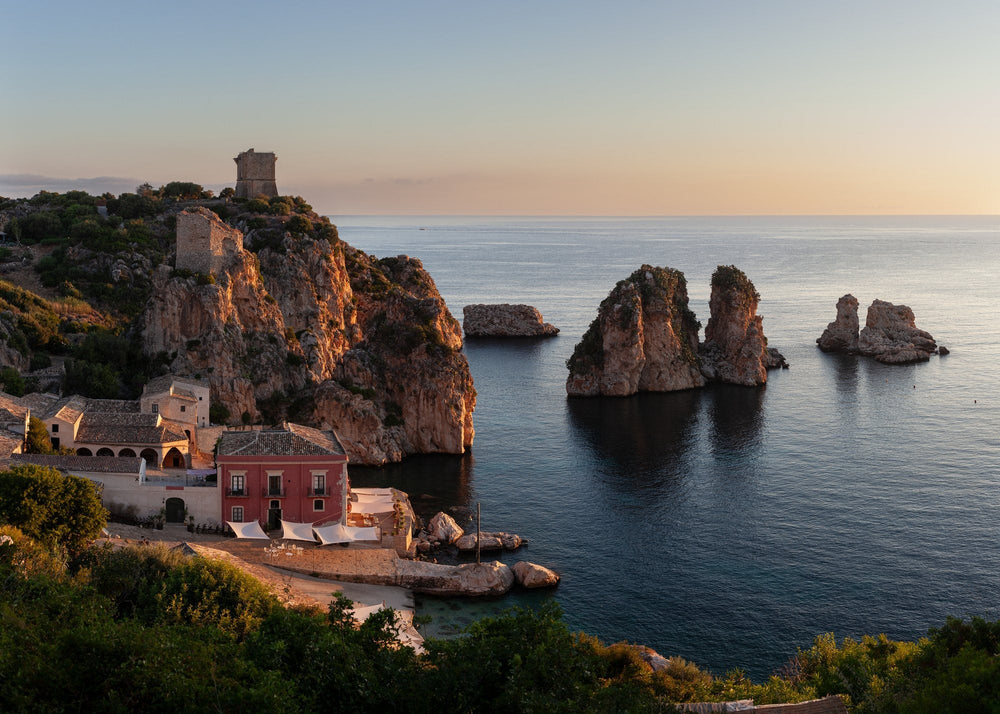
Favignana captures many of those same qualities through an entirely different setting. The sea shapes almost every part of the experience, with rocky coves and turquoise water replacing long sandy beaches. The island is small enough to explore almost entirely by bicycle, encouraging a slower pace where swimming, lingering over lunch, and watching fishing boats return to the harbor become the highlights of the day. It shares Paros’ effortless atmosphere, where luxury is found less in five-star resorts and more in simplicity, exceptional seafood, and spending as much time outdoors as possible.
What ultimately sets them apart is their cultural identity. Paros is unmistakably Greek, while Favignana feels deeply Sicilian. The food shifts from grilled octopus, fresh cheeses, and Greek salads to tuna prepared in countless ways, Sicilian pastries, and aperitivo in lively piazzas. The scenery changes too, replacing Cycladic villages with historic tuff quarries and traces of the island’s tuna fishing heritage.
Anyone drawn to Paros for its relaxed elegance will find that same spirit in Favignana—only through a distinctly Sicilian lens.
If You Loved Corsica, You’ll Love Luštica Peninsula


Some Mediterranean destinations never seem to chase attention. Corsica is one of them. Despite having some of Europe’s most spectacular coastline, it has largely resisted the kind of mass tourism that has transformed so many neighboring islands. Instead, it’s earned a reputation among travelers who value privacy, dramatic landscapes, and a quieter kind of luxury. Here, the appeal lies in hidden coves, mountain roads that suddenly open onto the sea, exceptional restaurants without long queues, and hotels that feel discovered through personal recommendations rather than social media.
For travelers drawn to that quieter side of the Mediterranean, Luštica Peninsula feels like a natural progression. Tucked away at the entrance to the Bay of Kotor, Luštica offers many of the qualities that have made Corsica so enduringly appealing. Olive groves give way to secluded beaches, centuries-old stone villages overlook the Adriatic, and boutique hotels blend naturally into the landscape. Although tourism has grown in recent years, the peninsula still retains the feeling that you’ve stumbled upon somewhere many travelers have yet to discover.
Neither destination revolves around ticking off famous attractions. They’re places where the landscape is the main event. Days are spent following winding coastal roads, discovering quiet swimming spots, lingering over seafood lunches, and ending the evening in a harbor that feels busy with local life rather than tourism. In both, luxury comes from space, authenticity, and the feeling that nothing is trying too hard.
The biggest difference lies in their cultural identity. Corsica reflects centuries of French and Italian influence, while Luštica introduces visitors to Montenegro’s Adriatic coast, where Venetian history, Balkan traditions, and an exciting new generation of hospitality are shaping the region’s future.
If Corsica represents the Mediterranean’s established quiet luxury, Luštica Peninsula feels like its next chapter.
If You Loved Zurich, You’ll Love Salzburg


Zurich is often thought of as a financial capital, but those who visit quickly discover that its greatest appeal lies elsewhere. Between its lakeside promenades, historic Old Town, world-class museums, and easy access to the Alps, Zurich offers a lifestyle that feels effortlessly balanced. It’s polished without being flashy, cosmopolitan without losing its sense of calm, and sophisticated in a way that never feels forced.
Swap Zurich’s lakeside promenades for Baroque squares and Alpine backdrops, and the feeling remains remarkably similar. Best known as the birthplace of Mozart and the setting for The Sound of Music, Salzburg is far more than a historic city. Elegant architecture, beautifully preserved streets, and immediate access to nature give Salzburg many of the same qualities that make Zurich so appealing. The surrounding mountains, riverside walks, and nearby lakes make it just as rewarding beyond the city center.
Where they begin to diverge is in their atmosphere. Zurich feels distinctly contemporary, with modern architecture, international restaurants, and a thriving business scene woven into its historic core. Salzburg, by contrast, feels more romantic and classically European, with Baroque churches, grand squares, and a cultural identity shaped by centuries of music and imperial history.
Travelers who appreciate Zurich’s understated sophistication will feel immediately at home in Salzburg.
If You Loved Marseille, You’ll Love San Sebastián


At first glance, Marseille and San Sebastián don’t seem like an obvious pairing. One sits on France’s Mediterranean coast, the other on Spain’s Atlantic coast. Yet the more time you spend in them, the more similarities begin to emerge. Both are cities shaped by the sea, where beaches, waterfront promenades, and historic neighborhoods exist side by side rather than in separate parts of the destination. They offer something surprisingly rare: the energy and cultural depth of a real city with the lifestyle of a coastal escape.
It’s precisely that balance that makes both cities so memorable. You can spend the morning wandering museums, independent boutiques, or local markets before heading to the beach without ever needing to leave the city behind. Neither feels like it was built around tourism. They’re places where people live, work, and gather by the water year-round, giving both cities an authenticity that’s difficult to replicate.
Marseille has one of France’s most exciting culinary scenes, shaped by generations of Mediterranean and North African influences. Seafood is everywhere, markets overflow with local produce, and eating well is simply part of everyday life. San Sebastián shares that same obsession with food. From its famous pintxos bars to its remarkable concentration of Michelin-starred restaurants, it’s a city where planning your next meal becomes just as important as planning what to see. In both destinations, the local food culture shapes the way you experience the city rather than simply complementing it.
Their personalities, however, couldn’t be more different. Marseille is energetic, multicultural, and slightly rough around the edges, embracing creativity and diversity in a way that feels distinctly its own. San Sebastián is more refined and unmistakably Basque, with Belle Époque architecture, elegant boulevards, and a deeply rooted regional identity. They may express themselves differently, but both cities have a strong sense of place that makes them feel unlike anywhere else in their respective countries.
If You Loved Malta, You’ll Love Cyprus


Malta is one of those places where the Mediterranean feels especially layered. Its appeal isn’t only in its beaches or warm weather, but in the way history is visible almost everywhere: fortified cities, Baroque churches, ancient temples, limestone villages, and harbors that have shaped the island’s identity for centuries. It feels compact but dense, with Arab, Italian, British, and North African influences all leaving traces in the architecture, language, food, and rhythm of daily life.
Cyprus offers that same sense of depth on a much larger scale. Like Malta, it sits at a crossroads of cultures, shaped by centuries of Greek, Roman, Byzantine, Venetian, Ottoman, and British influence. The result is an island where beach days can be paired with archaeological sites, mountain villages, monasteries, wine routes, old port towns, and cities where multiple histories coexist. It’s an island that rewards curiosity as much as it does relaxation.
Cuisine reinforces the comparison. Malta’s cuisine reflects its position between Europe and North Africa, with dishes influenced by Sicily, Britain, and the broader Mediterranean. Cyprus has its own equally distinctive food culture, rooted in Greek and Levantine traditions, where halloumi, grilled meats, meze, mountain wines, and long, generous meals are central to the experience. In both places, food becomes another way of understanding the island’s layered identity.
The most noticeable contrast is scale. Malta is smaller, easier to explore in a short trip, and more concentrated in its history and architecture. Cyprus is larger, more varied, and better suited to travelers who want a longer itinerary with beaches, cities, mountains, and archaeological sites all built in.
If You Loved Ischia, You’ll Love Ponza


While neighboring Capri often steals the spotlight, Ischia has quietly remained a favorite among travelers looking for a more authentic side of the Italian coast. Its appeal lies in the balance it strikes between everyday island life and refined hospitality. Fishing boats still fill the harbors each morning, thermal springs have drawn visitors for centuries, and evenings revolve around waterfront restaurants rather than exclusive beach clubs. It’s the kind of place people return to year after year because it never feels like it’s trying to impress.
Few Italian islands preserve that sense of authenticity quite like Ponza. Smaller and less developed than Ischia, Ponza has managed to preserve the feeling of a traditional Italian island where life revolves around the sea. Colorful houses climb the cliffs above the harbor, boats replace cars as the best way to explore the coastline, and many of the island’s most beautiful swimming spots can only be reached by water. Like Ischia, it feels distinctly local, with family-run restaurants, lively piazzas, and a pace that follows the rhythm of the Mediterranean rather than the demands of tourism.
The coastline is best explored by boat. Hidden coves, dramatic cliffs, sea caves, and impossibly clear water make boat days one of the highlights of both destinations. While neither island is known for long sandy beaches, they’re among Italy’s best places for swimming, snorkeling, and discovering secluded inlets that are inaccessible by land.
Where the two islands differ most is in what they offer beyond the coast. Ischia is larger and more varied, with thermal parks, vineyards, historic villages, and enough to fill a week or more. Ponza is smaller and simpler, making it ideal for travelers looking to slow down completely. If Ischia feels like Italy’s beloved island escape, Ponza feels like its quieter little sister—offering similar pleasures with even fewer crowds and a stronger sense of discovery.
If You Loved Canyon Point, You’ll Love Bardenas Reales


There’s something undeniably captivating about landscapes that don’t seem like they belong on Earth. That’s exactly what draws travelers to Canyon Point, where vast desert panoramas, sculpted sandstone cliffs, and endless open skies create a sense of isolation that’s increasingly rare to find. It’s a destination where luxury exists to frame the landscape rather than compete with it.
That same feeling is what makes Bardenas Reales such an unexpected recommendation. Often described as Europe’s closest equivalent to the American Southwest, Bardenas Reales is a striking semi-desert shaped by centuries of wind and erosion. Towering rock formations, dramatic plateaus, and dusty tracks stretch for miles, creating scenery that feels more like Utah than northern Spain. As in Canyon Point, the experience isn’t defined by individual attractions but by the overwhelming scale of the landscape itself.
Hospitality follows the same philosophy in both places. Rather than building around busy town centers or famous landmarks, the experience revolves around staying somewhere that feels deeply connected to the surrounding environment. Whether that’s waking up to uninterrupted desert views, spending the day hiking or exploring by car, or watching the landscape change color as the sun sets, the accommodation becomes part of the destination rather than simply a place to sleep.
The landscapes may evoke one another, but their settings are worlds apart. Canyon Point offers the vastness of the American Southwest, surrounded by some of the country’s most iconic national parks. Bardenas Reales delivers a remarkably similar atmosphere within Europe, making it a far more accessible option for travelers looking for dramatic desert scenery without crossing the Atlantic.
If You Loved Sorrento, You’ll Love Cagliari


Sorrento is often seen as the gateway to one of Italy’s most famous coastlines. Perched on cliffs overlooking the Bay of Naples, it’s perfectly positioned for exploring the Amalfi Coast, Capri, and Pompeii, while offering a lively atmosphere of its own. Unlike many coastal destinations, Sorrento isn’t simply a picturesque village or beach resort—it’s a real seaside city with bustling shopping streets, historic hotels, marinas, local markets, and enough restaurants, cafés, and cultural attractions to fill several days without ever leaving town.
As the capital of Sardinia, Cagliari delivers a remarkably similar experience from an entirely different corner of Italy. You can spend the morning wandering through the hilltop Castello district, exploring museums and lively piazzas, before heading to Poetto Beach for the afternoon or enjoying fresh seafood along the marina in the evening.
Their role as gateways to extraordinary coastlines is another reason the comparison works so well. From Sorrento, the Amalfi Coast unfolds just beyond the city, with dramatic cliffside roads, hidden coves, and colorful fishing villages. From Cagliari, some of southern Sardinia’s most beautiful beaches—from Chia to Villasimius—are all within easy reach, offering crystal-clear water and white sand that rival anywhere in the Mediterranean. In both cases, staying in the city gives you the best of both worlds: the energy, restaurants, and convenience of an urban center, with extraordinary coastal landscapes just beyond your doorstep.
Their atmospheres, however, are distinctly different. Sorrento is more polished and internationally known, with grand historic hotels, lemon groves, and a long tradition of welcoming travelers. Cagliari feels more local and understated, shaped by centuries of Sardinian, Spanish, and Italian influence. Its pace is slightly slower, its tourism less concentrated, and its identity more distinctly tied to the island it calls home.
For travelers who loved Sorrento because it combined the charm of the Italian coast with the vibrancy of a real city, Cagliari offers that same experience in a destination that’s often overlooked. It’s the kind of place where you don’t have to choose between culture, great food, and days by the sea—you can have all three in one trip.
If You Loved Marbella, You’ll Love Porto Ercole


Few destinations have come to define Mediterranean glamour quite like Marbella. Luxury hotels, marinas filled with yachts, designer boutiques, and beach clubs have made it one of Europe’s most recognizable seaside destinations. Yet beyond the headlines and celebrity appeal, what keeps people returning is the lifestyle itself: mornings by the sea, afternoons spent lingering over lunch, evenings that begin with aperitivo and end at lively waterfront restaurants. It’s elegant without needing an itinerary packed with sightseeing.
That same effortless lifestyle is what makes Porto Ercole such a natural recommendation. Tucked away on the Monte Argentario peninsula, Porto Ercole has quietly become one of Italy’s most exclusive coastal destinations, attracting families, yacht owners, and those who value privacy over publicity. The harbor is lined with sailing boats instead of mega yachts, luxury reveals itself through discreet villas and historic hotels rather than towering resorts, and the atmosphere feels refined without ever becoming ostentatious.
Both destinations are defined as much by the people they attract as by their landscapes. Sailors, second-home owners, and families who have been returning for generations give both destinations a sense of permanence rather than trendiness.
Luxury takes a different form in each destination. Marbella embraces an international, energetic atmosphere where high-end shopping, nightlife, and glamorous resorts are part of its identity. Porto Ercole feels quieter and more understated, with a distinctly Italian sense of elegance rooted in exceptional seafood, small boutiques, sailing culture, and a coastline that has remained unspoiled.
For travelers who appreciate Marbella’s lifestyle more than its celebrity status, Porto Ercole offers an equally elegant, but far more discreet, Mediterranean escape.