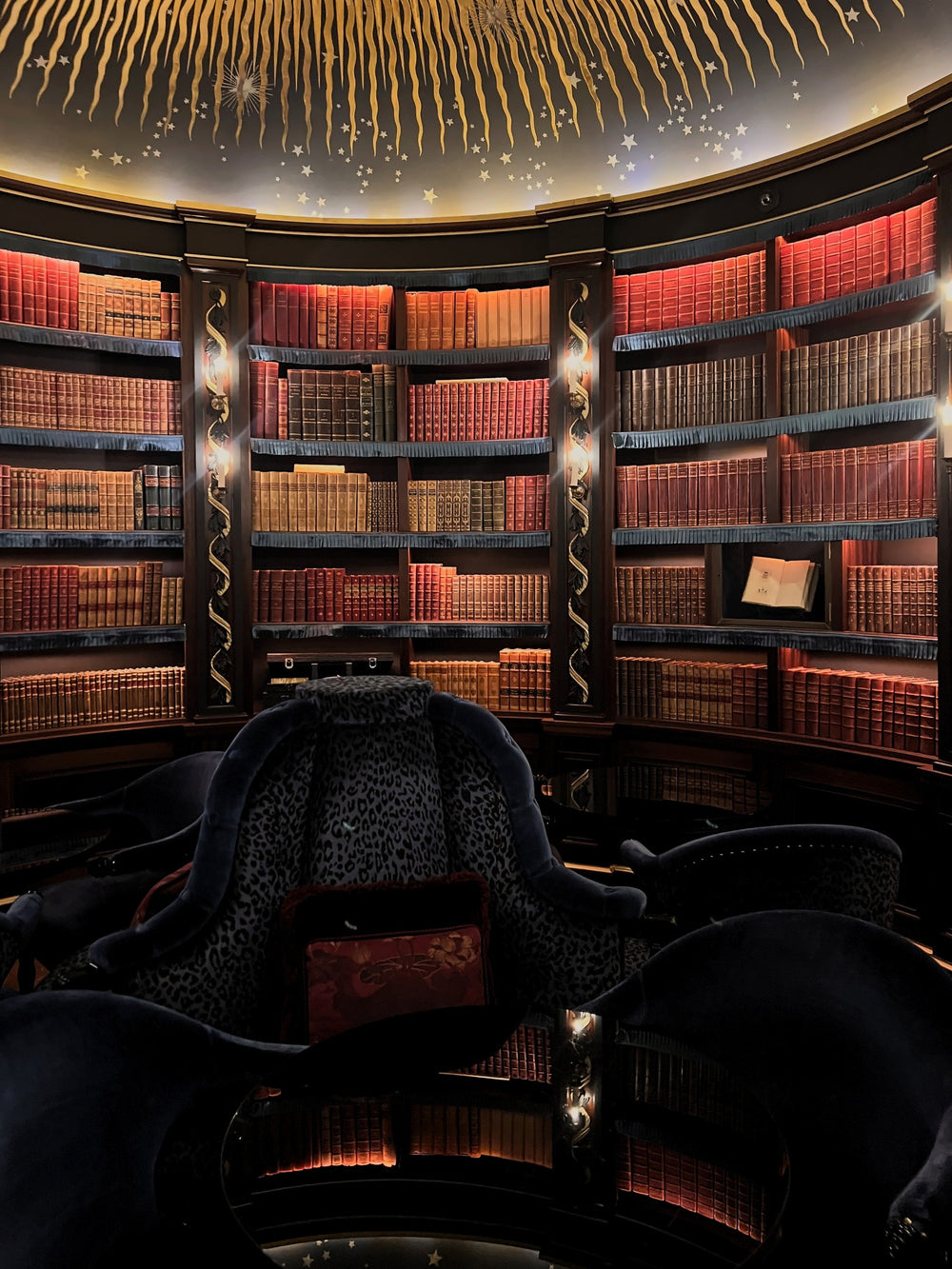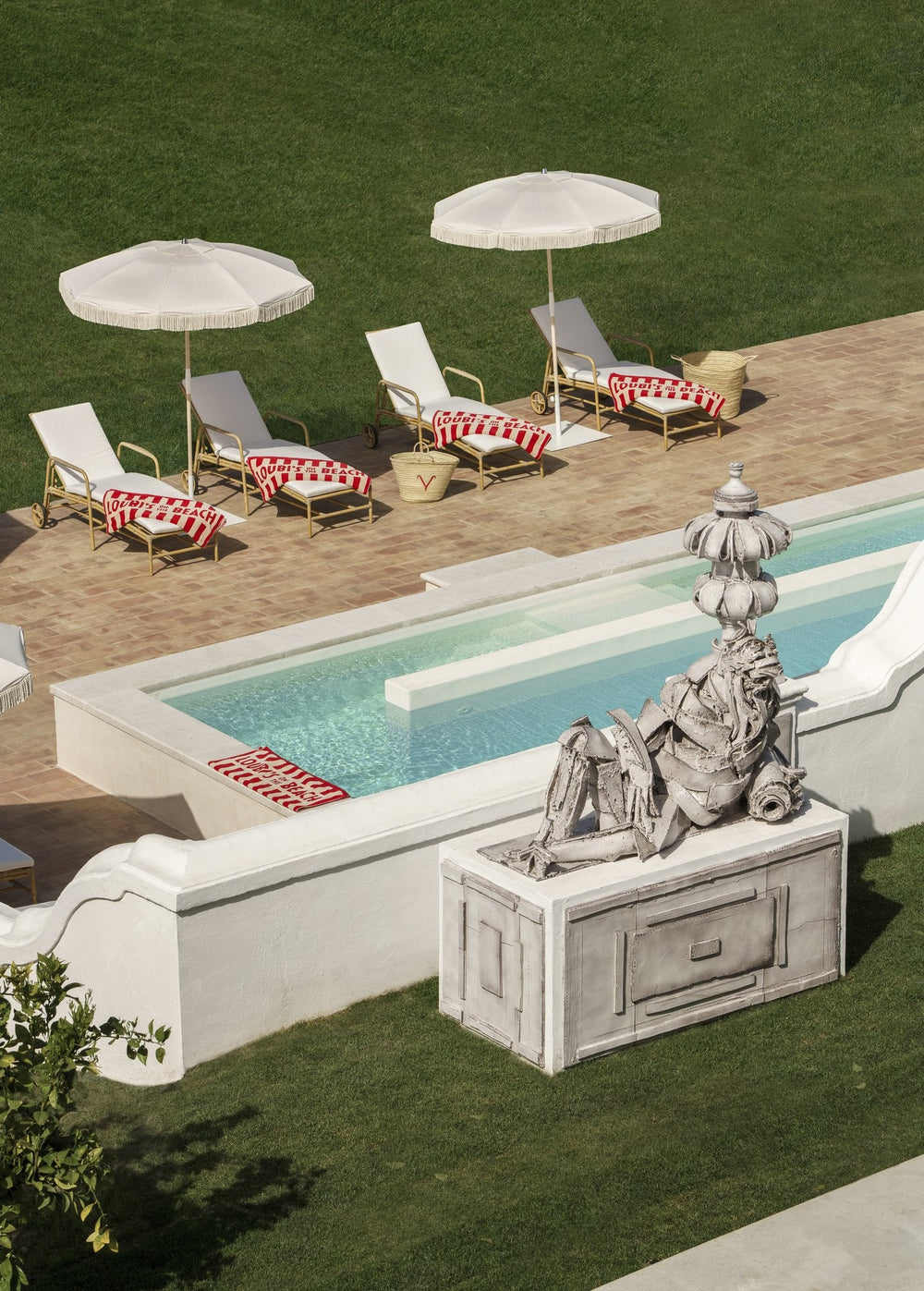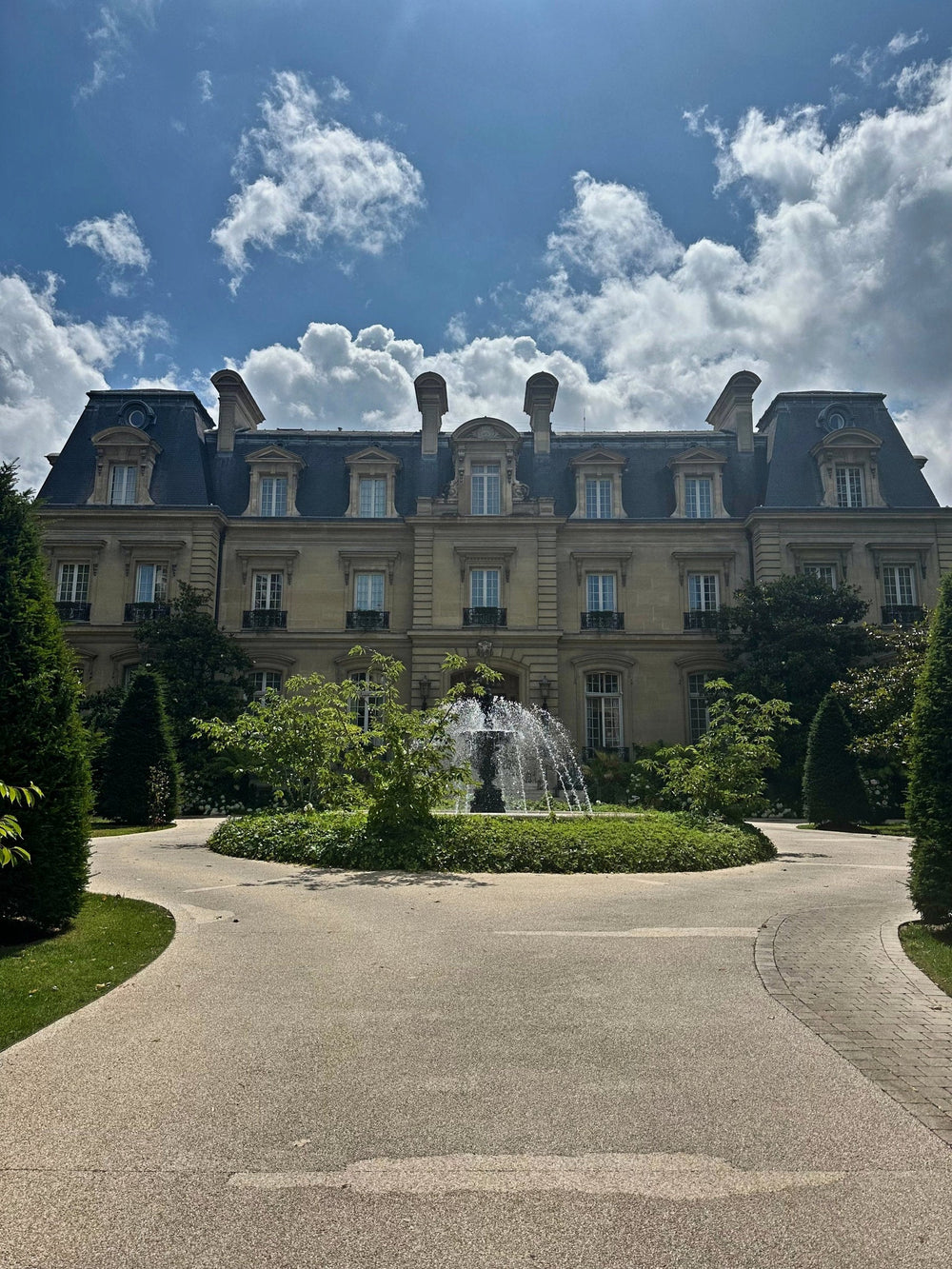


There’s an intellectual confidence to a hotel that leads with its art, a sense that whoever built it cared about more than thread counts and turndown service. Walking through The Fife Arms in the Scottish Highlands, past works by Picasso and Queen Victoria, feels almost anachronistic. At La Colombe d’Or in Saint-Paul-de-Vence, the Matisses and Légers on the walls aren’t decorative, they’re practically the reason the place exists. The Dolder Grand in Zurich takes a different approach entirely — Hirst, Koons, Lichtenstein — contemporary work that makes the whole stay feel sharper and more provocative.
The type of art matters. Classical and historical collections carry weight, there’s a gravitas that slows you down, makes you look twice at a corridor you’d otherwise pass without thinking. Contemporary and modern work does something different; it creates friction in a way that’s energizing, sometimes unsettling, always interesting.
Curation, at its best, is a form of storytelling and these are hotels that have something to say.


The Fife Arms, set in the village of Braemar in the heart of the Scottish Highlands, is far more than a luxury hotel; it is a cultural landmark deeply woven into the history and identity of the village itself. Originally established in 1856, around the same time Queen Victoria acquired nearby Balmoral, the area became one of the royal family’s beloved retreats, with the Queen frequently visiting the surrounding countryside for horseback rides and picnics. Its rebirth in 2018, after being on the verge of collapse from decades of war and constant changes in ownership, sought not simply to revive the building, but to return it to the grandeur of the Victorian era while celebrating the many layers of history it has witnessed since. Today, The Fife Arms houses one of the finest private collections of British modern art, with more than 16,000 pieces displayed throughout its corridors, drawing rooms, and guest spaces. The collection spans centuries and cultures, reflecting both the artistic heritage of Scotland and the wider world beyond it. Guests can join daily art tours, discover hidden spaces such as the secret room dedicated to Gabrielle “Coco” Chanel, a devoted patron of the hotel, and even engage younger travelers through family-friendly art experiences. At The Fife Arms, art is not confined to a gallery; it is woven into the very fabric of the stay.

The Dolder Grand, one of Zurich’s landmark hotels since 1899, is a beautiful property that blends history with modernity through its historic main building and contemporary extensions designed by London-based architects. The Dolder Grand boasts over 100 pieces of art from 90 different artists, reflecting both tradition and the importance it places on contemporary culture and modern living. There is remarkable diversity among the artists represented throughout the hotel. Next to works by Swiss icons such as Ferdinand Hodler, Urs Fischer and Max Bill, there are works of art by artists from all over the world. Guests are greeted by Femmes métamorphosées – Les sept arts by Salvador Dalí at the entrance to The Restaurant, one of a series of seven oil paintings that explore the fluidity and delicate features of women through an abstract lens. On the way to the Spa stands Le Monde by Niki de Saint Phalle and Jean Tinguely, a colorful sculpture of painted polyester and gold leaf set atop a rusted metal base. Standing on the Spa terrace is Woman with fruit, a captivating bronze sculpture that is unmistakably a work by Colombian artist, Fernando Botero. Artists such as Joan Miró, Max Ernst, Anselm Kiefer and Keith Haring are also represented, while the collection is further complemented by contemporary artists including Jani Leinonen, Takashi Murakami, and Sylvester Stallone.
Heckfield Place, a restored Georgian home that has been gently evolving over 250 years, is located on a beautiful stretch of English countryside only an hour away from London. Surrounded by the working estate, the hotel remains deeply connected to the land itself and to the rhythms of rural life. The grounds embody the Georgian fascination with nature and open-air spaces encompassing lakes, walled gardens, and the woodlands that invite guests to slow down and explore. The Home Farm, an integral part of the estate, is home to Guernsey cows as well as an abundance of fruit, vegetables, and flowers. Breathtaking artwork fills every inch of the grand hotel from owner Gerald Chan’s personal collection of 20th-century British art. Yet at Heckfield Place, the idea that art is life extends far beyond paintings and sculptures. The hotel offers immersive experiences that guests can treasure long after their stay is over. Outdoor pursuits include fishing, boating in the surrounding lakes, bird-watching, falconry, as well as learning the art of floral arrangement and design. Those who love spending time in the garden have the opportunity to learn how to plant, sow seeds, and build bird houses. Those seeking culinary growth can learn the art of preservation through fermentation, take cake decorating classes, or join cocktail-making masterclasses with special attention given to the craft of gin. The art of cinema can be experienced in the manor’s private theater hidden underground, while opportunities for physical movement abound through croquet, cycling, and hiking. At Heckfield Place, art is not simply displayed—it is woven into everyday life.


The Beaumont Mayfair, a luxury boutique hotel voted number 1 hotel in London, prides itself on being a modern work of art in its own right that stretches the imagination with intentional decor that lend depth and character to every room. Following its recent renovation, the hotel now proudly showcases over 600 pieces of art throughout the property. Le Magritte Bar, at the end of the hotel’s lobby, is named after the celebrated artist René Magritte, whose works it prominently displays. Filled with light and bold color, the space reflects the hotel’s broader vision of restoring its 1920s splendor while embracing contemporary elegance. The Beaumont’s art collection, curated in partnership with London’s Zuleika Gallery, features 20th Century pieces by British, European and American artists including Georges Braque, Patrick Caulfield, Sonia Delaunay, Sir Howard Hodgkin, Joan Miró, Robert Motherwell, Man Ray, Ben Nicholson, and Graham Sutherland. Those drawn to more modern works of art can take in paintings, prints, and ceramics by contemporary artists including Rana Begum RA, Pablo Bronstein, Halima Cassell, Luke Edward Hall, Cornelia Parker and Bridget Riley, alongside murals and site specific commissions by Nancy Cadogan, Rachel Gracey RE, Nigel Hall RA, Nicola Green, and Katie Ponder.
La Colombe d’Or, originally built as a café-bar in 1920 by Paul Roux, later evolved into an inn that remains in the family to this day, now owned by the founder’s grandson. Over the past century, it has played a defining role in shaping the artistic identity of Saint-Paul de Vence in Provence, France, becoming one of the region’s most celebrated cultural landmarks. During the pre- and post-war periods, Roux welcomed artists to stay at the inn or dine at its restaurant, often accepting works of art in place of payment. During the upheaval of World War I, Impressionists and Post-Impressionists, including Pierre-Auguste Renoir and Henri Matisse, were drawn to the village. Later, the serenity of the landscapes in view, the warm Mediterranean light, and the inn’s reputation as a safe haven for creativity attracted artists seeking refuge and inspiration during the hardships of World War II, including Marc Chagall. Among its most renowned guests was Pablo Picasso, whose works now adorn many of the hotel’s dining rooms, corridors, and guest bedrooms. His Calder mobile is hung by the pool and portrays fluidity as it moves with the wind. The prestige associated with the works of art the hotel houses never take away from the homey, humble environment that has defined the inn for over a century. Set in the heart of the Provençal countryside, the hotel also offers art lovers easy access to the many artistic landmarks of the region. Few places blur the line between hotel, home, and living museum quite like La Colombe d’Or.

Le Negresco in Nice, France is one of only four active hotels considered a Belle-Epoque Palace, otherwise known as those grand hotels originally built to welcome wealthy European travelers during the winter months. Today, it remains remarkably true to its heritage, not just in the art it holds, but in the architecture of the building itself. Madame Jeanne Augier acquired the hotel in 1957 and, through her relentless search across France for extraordinary works of art, gave rise to the remarkable collection that gives Le Negresco its unique identity. Madame Augier was an avid collector of furniture, art objects, and paintings and was determined to transform her beloved hotel into the “Versailles of the French Riviera,” or the “Versailles de la Côte d’Azur.” A mantelpiece from the Château de Hautefort and wood panelling from the Château de Chaintré were among the elements she selected to be at the core of the hotel’s salons and restaurants. Over the decades, through auction houses and private sales, the collection grew to include over six thousand items of historic and artistic significance. The hotel today offers a diverse and peak display of the finest French decorative styles, from Louis XIII to the 20th century. Two of the most essential aspects of her vision’s legacy are the remarkable collection of 17th and 18th century portraits and sculptures, and a carefully curated selection of modern artworks, a testament to Madame Augier’s lasting commitment not just to the past, but to living artists as well.
The Merrion, located in the heart of Dublin, is widely regarded as the city’s most luxurious hotel and is also a proud member of The Leading Hotels of the World. The hotel remains true to its Georgian origins, occupying a series of townhouses first built in the 1790s by Sir Charles Stanley Monck, with dignified yet elegant architecture that reflects Dublin’s rich history. The property captures the spirit of 18th Century Dublin, when the Renaissance transformed the city from a Mediaeval village, to one of the finest Georgian cities in Europe. The Merrion houses an important private collection of 19th- and 20th-century art, for which its grand interiors offer the perfect backdrop, creating a striking contrast between classical architecture and noteworthy Irish and European art. The hotel’s celebrated Art Afternoon Tea, led by pastry chef Paul Kelly, transforms beloved artworks from the collection into edible creations, extending the artistic experience beyond the gallery walls. Furthermore, Irish artist Martin Mooney, was commissioned to paint a series of murals for the elegant neo-classical stairwell in The Merrion’s Front Hall. In subtle, warm colours, he was able to depict imaginary classical ruins, buildings, and architectural details that feel particularly at home within the hotel’s Georgian interiors. The collection also includes works by many prominent figures in Irish and European art history. Among them is Paul Henry, whose muted palette and flattened compositions were shaped by the influence of James McNeill Whistler, in whose studio he studied. His works Killary Harbour and Fishermen on the Beach, both displayed in the hotel, elevate scenes of everyday rural life with quiet dignity. Nathaniel Hone’s Harbour View similarly reflects his fondness for intimate landscapes, using a low horizon line to place emphasis on the drama and brilliance of the sky. Artists such as Mainie Jellett, Sir John Lavery, William Leech, Roderic O’Conor, Mary Swanzy, William Scott, and Pauline Bewick are also represented throughout the collection, making The Merrion not only one of Dublin’s finest hotels, but also one of its most important cultural destinations.

Art works on you quietly — the way a Miró in a hallway changes how you walk through it, or how a sculpture in a courtyard makes you sit longer than you planned. The hotels that understand this don’t use art as decoration, they use it to construct a culturally alive world. It’s a more lasting kind of escapism than anything a spa menu can offer.