

During Fashion Week, Milan runs on reservations. The city’s restaurants become extensions of the runway: editors at late lunches, buyers in private dining rooms, designers slipping in after shows, and dinner plans made weeks in advance. The city feels more polished, more crowded, and more aware of itself.
The right reservation matters. Milan is not a city that rewards wandering into dinner unprepared, especially during Fashion Week. Some rooms are glossy and theatrical, some are tiny and guarded, some are old-school enough to feel immune to trend. The best places are not always the newest or loudest. They are the ones that understand atmosphere, timing, discretion, and the specific pleasure of being somewhere unmistakably Milanese.

Langosteria
Founded in Milan in 2007, Langosteria brought a more cosmopolitan seafood culture to a city long defined by formal, traditional dining. Its world is glossy, international, and unmistakably Milanese: white tablecloths, red glassware, glamorous interiors, lively rooms, and service that moves with practiced precision.
Today, Langosteria is one of Italy’s most recognizable restaurant groups, with addresses spanning Milan, Paris, St. Moritz, and Paraggi. The appeal is clear: exceptional seafood, polished energy, and a clientele that ranges from local regulars to international travelers and fashion insiders.
Signature dishes such as red prawn carpaccio, seafood towers, and shellfish pastas have become part of its mythology. During Fashion Week, it is the seafood classic for a dinner that needs to feel elegant, social, and securely in the center of things.
Il Ristorante Niko Romito
Inside the Bvlgari Hotel, Il Ristorante Niko Romito is Milan at its most refined. The dining room moves between polished wood, black lacquer, white tablecloths, and low amber light, with the quiet choreography of a fine dining restaurant. It has the feeling of a private salon: elegant, exclusive, and highly composed.
It suits a lunch between shows when you want calm without sacrificing glamour. Everything feels measured: the pacing, the service, the room, the food, the way a waiter seems to understand the table before anyone has to ask. During Fashion Week, when the city can feel overextended, Bvlgari offers a reset with polish.
La Latteria San Marco
La Latteria San Marco feels impossible to manufacture: eight tables, no reservations, a line outside, and the strange electricity of a room everyone seems relieved still exists. Tucked on Via San Marco, it has the intimacy of a family kitchen and the mythology of a Fashion Week address passed quietly between editors, locals, designers, and regulars.
Its recent revival only adds to the charge. After nearly closing, Vittoria Loro Piana returned La Latteria to the Milanese people with its soul intact: the room still tight, the pace still slightly chaotic, the cooking still rooted in ritual, and the front of house still handled with the kind of familiarity that makes newcomers feel like they have entered someone else’s long-standing routine. It is cozy, guarded, hard to get into, and worth arranging your day around. During Fashion Week, you can rest assured that this is one of the hotspots.
Le Specialità
Le Specialità is one of Milan’s most established pizzerias, known for its extensive menu, loyal regulars, celebrity following, and steady Fashion Week presence. The entrance is understated, the dining room is long and lively, and the atmosphere carries the confidence of a restaurant that has never needed to over-explain itself.
The pizza is thin, crisp, and generous, with dozens of variations ranging from classic combinations to more indulgent signatures. The scale of the menu is part of its appeal: Le Specialità treats pizza with the seriousness of a full Milanese dining ritual.
Sunday lunch is the ideal moment to go, when the room fills with families, regulars, well-dressed Milanese, and booked-ahead tables settling in for wine, football, and a steady rhythm of pizzas from the kitchen. During Fashion Week, it offers a polished but easy address: famous, energetic, and rooted in the city’s appetite for good food served without too much performance.
La Rue
La Rue has built a scene around one idea: steak frites, served with the confidence of a restaurant that understands the glamour of limitation. One of Milan’s most talked-about new openings, it has the elegance of a French brasserie and the pull of a room everyone wants to try. The dinner crowd is polished, trend-aware, and happy to surrender to a format that asks almost nothing beyond appetite.
It works especially well during Fashion Week because it removes decision fatigue. The meal has a clear rhythm, the room has a clear point of view, and the crowd gives the night its charge. Simple, social, controlled, and sharply formatted: exactly the kind of place that becomes a favorite because it does not try to do everything.
Giacomo Arengario
Giacomo Arengario is Milan with the Duomo in full view. Set inside the Museo del Novecento, the restaurant looks directly onto the cathedral from its glass-enclosed loggia and terrace. After dark, the setting becomes cinematic: the square glowing below, the cathedral lit from the outside, and the dining room holding its formal gold-toned elegance behind glass.
This is the address for a Fashion Week dinner that needs a view and a sense of occasion. It feels unmistakably Milanese, formal without being stiff, and theatrical in a way that belongs to the city rather than the room trying too hard. Book it when the setting matters as much as the meal.
Enoteca Cotti
Enoteca Cotti is one of Brera’s most atmospheric rooms: dark wood, chandeliers, bottles stacked high, floor-to-ceiling shelving, and the feeling of a place allowed to age correctly. Open since 1952 and run by generations of the Cotti family, it sits somewhere between a wine shop, restaurant, and Milanese institution.
This is the place for a more intimate Fashion Week evening, especially when the night calls for wine, conversation, and a room with texture. Staff guide with precision, responding to taste, budget, and occasion without turning the exchange into theater. It works for dinner, a spontaneous stop, or one glass that becomes several.
Il Salumaio di Montenapoleone
Il Salumaio di Montenapoleone is Milanese luxury in its most established form: a historic address inside the Bagatti Valsecchi palace, just off the city’s most polished shopping streets. Since 1957, it has served a clientele that treats lunch in the fashion quadrilateral as habit and theater. The room carries dark wood paneling, crisp service, silverware, glass, and the charge of a restaurant that has watched generations of Milanese society pass through.
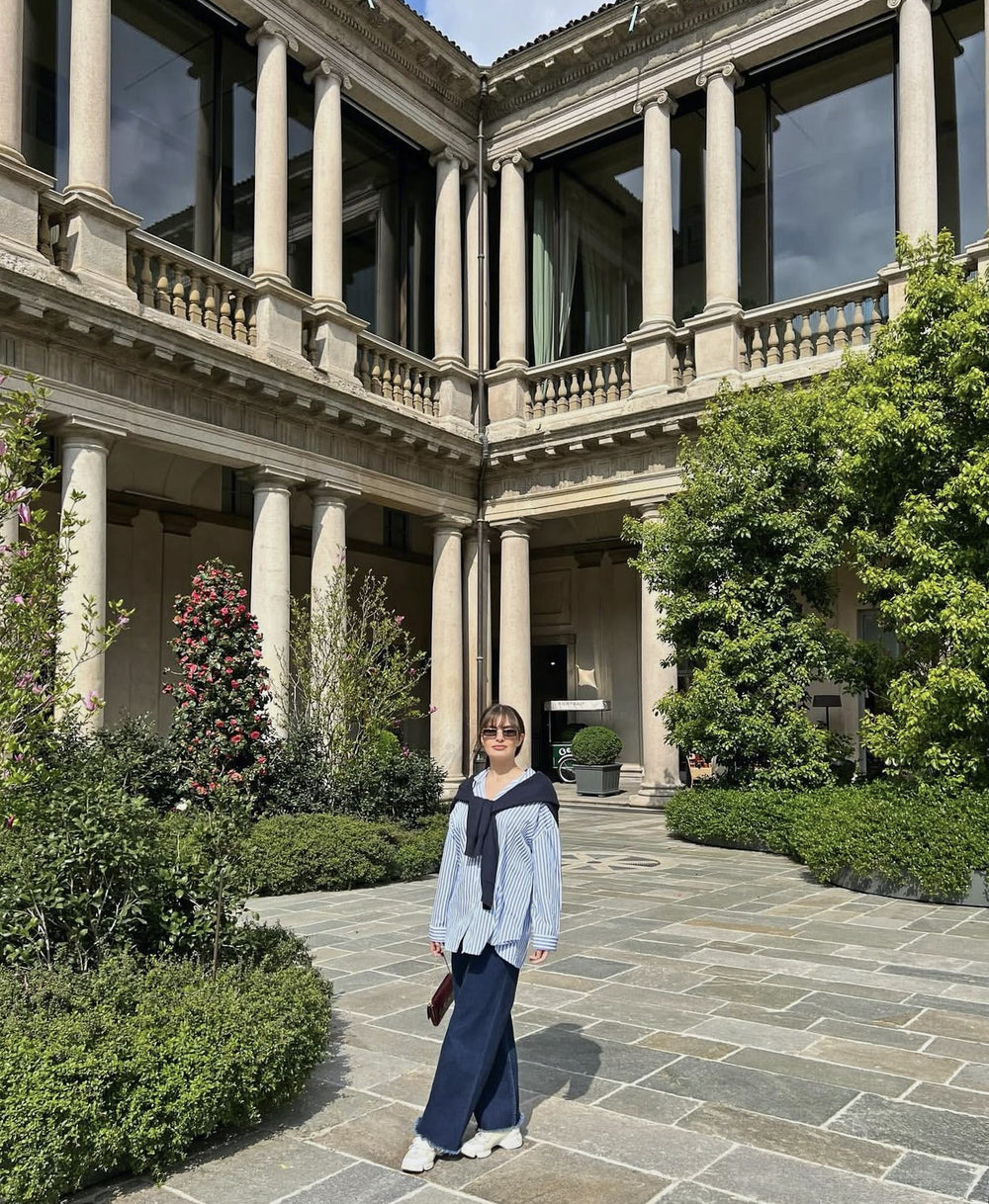
The courtyard is the table to ask for. Set within the Renaissance architecture of the palazzo, it feels like slipping behind the public face of Milan into something private: marble, porticos, tailored coats, shopping bags beside chairs, and plates arriving with quiet precision. During Fashion Week, Il Salumaio is a rite of passage: a courtyard table, a polished lunch, and the unmistakable sense that Milan knows exactly who is in the room.
Trippa
Trippa runs on a tight system, and the difficulty of getting in has become part of the restaurant’s identity. Reservations open at noon on the first of each month for the following month and usually disappear within minutes. That urgency is part of the appeal. You plan ahead, set an alarm, and hope Milan lets you in.
The room is compact, active, and deeply confident. It does not have the gloss of hotel dining or the obvious drama of a Duomo view, but it has the kind of specificity that makes a restaurant feel important. During Fashion Week, Trippa rewards the person who plans ahead: grounded, precise, and deeply Milanese in its appetite.
For more of our favorite Milan addresses, explore the newly updated Apolide Milan Guide. From hotels and aperitivo bars to neighborhood restaurants, shopping, and local favorites, it’s designed for those looking to experience the city beyond the obvious.